


Trump Gives Maduro His Wish

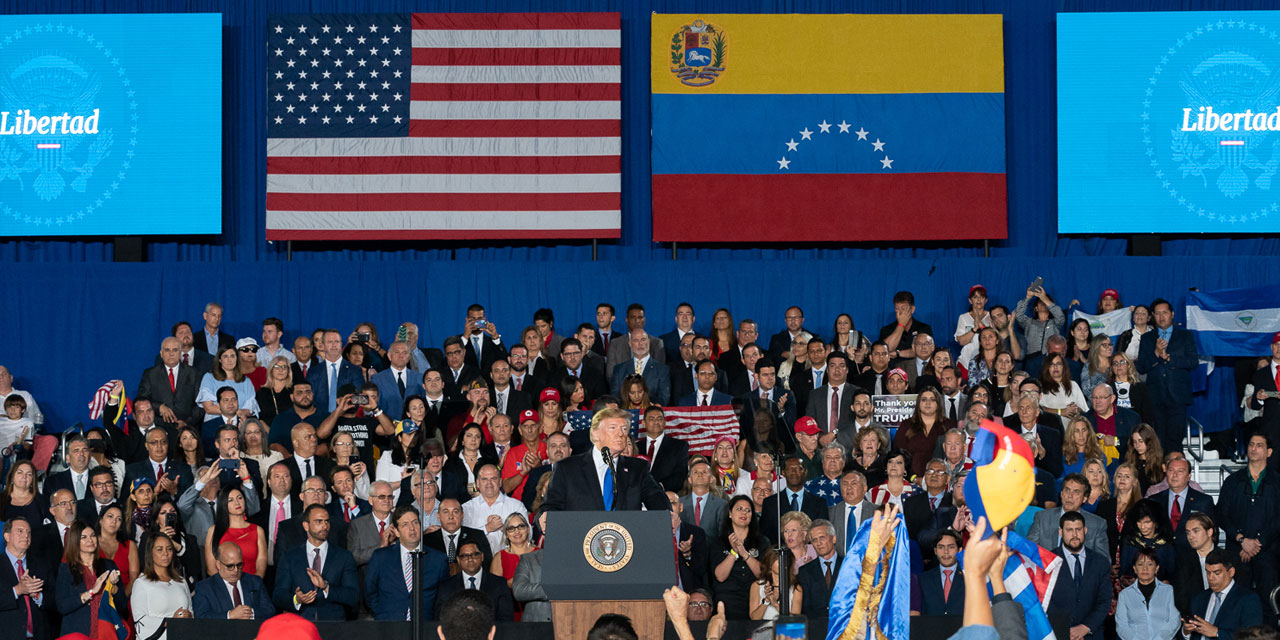
Last month, the United States executed a military operation that resulted in the capture of Venezuela’s former president, Nicolás Maduro. Planned since late summer, the mission followed months of intelligence gathering by the CIA, which monitored Maduro’s movements and the Venezuelan security apparatus. In August, U.S. destroyers, cruisers and aircraft were deployed to the Caribbean to surveil the region and intercept narcotics trafficking in the Gulf of America. After months of preparation, President Donald Trump authorized the final phase of the operation, as U.S. forces first struck Venezuelan surface-based air defenses, clearing the way for a massive aerial operation involving roughly 150 aircraft providing air support and radar jamming. Under that cover, Delta Force helicopters descended on Maduro’s compound, deploying troops who successfully captured both Maduro and his wife in the middle of the night. The entire mission lasted just over two hours, leaving approximately 80 of Maduro’s guards dead, while U.S. forces suffered no casualties.
The true objectives of the operation unfold across multiple time horizons. In the short term, it puts massive pressure on the Canadian oil industry, which will hopefully lower gas prices in the next year. For context, during the 1990s, Mexico emerged as a major oil producer, drilling roughly 2.5 million barrels per day. A vast amount of said production was heavy sour crude oil, a type that the United States doesn’t mass-
produce. As a result, in the 1990’s the U.S. heavily invested in Gulf Coast refineries to process this heavy crude oil. However, since Mexican oil production ran dry in the mid-2000s, the U.S. now relies on Canada for about 60% of its heavy crude imports, giving Ottawa leverage over the U.S. This is why Venezuelan oil is strategically important: they hold the largest crude oil reserves in the world, an estimated 300 billion barrels, and the United States already has the refineries to process them due to investment from the 1990s. In the next few years, as the United States weans itself off Canadian oil in favor of Venezuelan oil, supply will increase, and hopefully the price will decrease.
The longer-term rationale for the operation centers on sustaining American dominance in the Western Hemisphere, as the likelihood of a future conflict with China increases. Over the past several decades, China has constructed roughly 37 ports and shipping terminals throughout the Caribbean. While often framed as commercial infrastructure, such facilities carry clear dual-use potential. Ports built for trade can also support military logistics, personnel and equipment, and China has demonstrated that they don’t mind blurring that line. In fact, intelligence has found they have containerized missile platforms disguised as standard shipping cargo. If the Chinese take Taiwan, which seems only a matter of time, that move will expand its global reach and control over the Pacific. The United States must ensure that our hemisphere is fully within our control before it is too late.
This operation to capture President Maduro is a modern extension of the longstanding American strategy that is rooted in the idea of Manifest Destiny and the Monroe Doctrine. In the early to mid-1800s, when the United States was in an age of rapid expansion, Manifest Destiny emerged as the idea that the country was entitled to as much land as it could possibly get its hands on in North America. In 1823, President James Monroe declared in his State of the Union address that the entire Western Hemisphere was off-limits to European colonial ambitions. While at the time the United States was in no position to actually defend the hemisphere, that quickly changed about a century later when President Theodore Roosevelt stated that the United States could intervene in the internal affairs of Western Hemisphere nations to maintain order. The Maduro capture represents Washington’s desire to protect its “backyard” and maintain hemispheric dominance.
This operation shows that the Trump administration is thinking critically about the nation’s short-term, medium-term and long-term security and interests. Finally, the interests of this hemisphere belong to the United States. I applaud the Trump administration for laying down the law and not only taking what they want, but taking what is in the best interest of America and its people. As far as I am concerned, we can do what we want without asking any international body or getting any permission. This move is an America-First operation that has restored some of my confidence in this administration.