


Jeff Sharlet Shares All

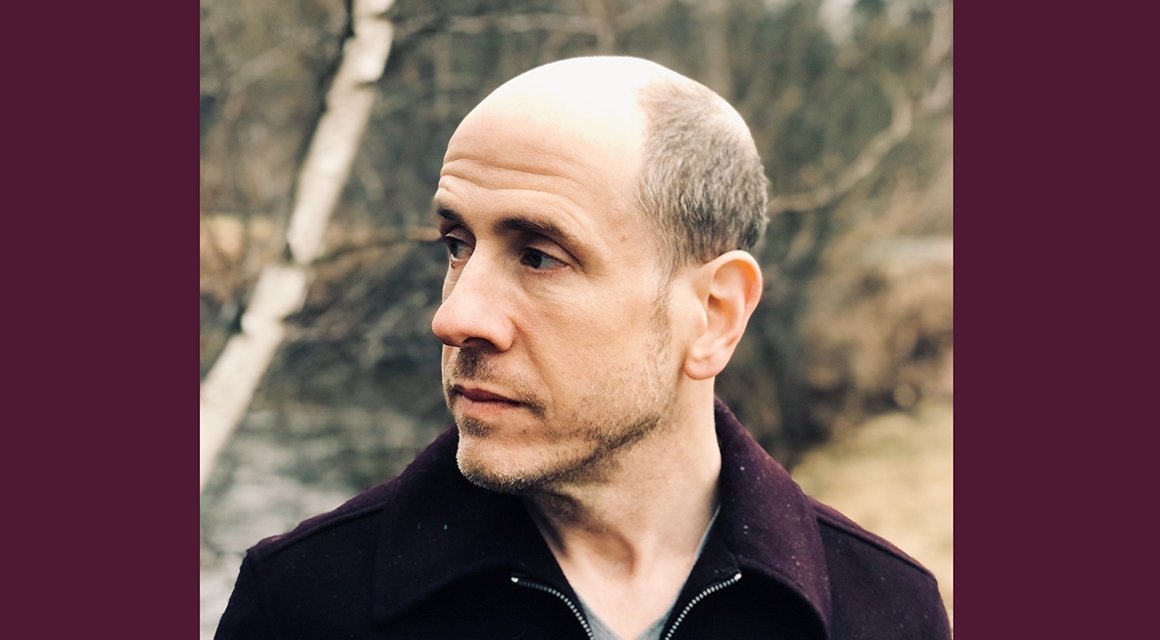
Last Thursday, Sept. 11, writer Jeff Sharlet visited St. Lawrence University for the first Writers Series event of the 2025-26 academic year. Sharlet is a New York Times bestseller author or editor of eight books, including his most recent, “The Undertow: Scenes from a Slow Civil War.” He is also the Frederick Sessions Beebe ’35 Professor in the Art of Writing at Dartmouth College.
Sharlet’s visit came just one day after conservative activist Charlie Kirk was shot at Utah Valley University in Orem, Utah. This event loomed over Sharlet’s talk, as one audience member later commented. Two Safety and Security officers stood watch in the back of the Sykes Formal Lounge as Sharlet gave his talk.
Sharlet began his talk by asking the question, “Do you believe that a civil war can come?” He said he has raised this question throughout his career, most recently after the Jan. 6 riots. His response, after the Kirk shooting, was “I think we are a lot closer to [a civil war] than we were two days ago.”
Sharlet continued his talk by calling upon The Weavers, the 1940-50s folk group, consisting of Lee Hays, Pete Seeger, Ronnie Gilbert and Fred Hellerman. Sharlet talked about their song “If I Had a Hammer,” a song that became an anthem for blue collar workers in America. It was first performed by Seeger and other folk activists in 1949. The performance was interrupted by anti-communist protesters.
Sharlet employed A. Kendra Greene, the 2025-26 Viebranz Visiting Professor of Creative Writing, to sing a portion of the “Hammer” song for the audience: “If I had a hammer, I’d hammer in the morning/I’d hammer in the evening all over this land/I’d hammer out danger, I’d hammer out a warning/I’d hammer out love between my brothers and my sisters/All over this land.”
Shortly after Sharlet’s retelling of the concert, the phone of a security officer began ringing in the back of the room. Then, Sharlet began discussing the Jan. 6 riots in further detail. He said his take on differing opinions of the event is to “agree to disagree.” His book, “The Undertow,” talks a lot about the event, specifically focusing on Ashli Babbitt, a protester who was shot and killed while attempting to climb into the Capitol building. Sharlet said the Babbitt became a “martyr” to many supporters of President Donald Trump. He then recited a passage from “The Undertow,” detailing Babbitt’s shooting and the events leading up to that moment.
The audience was silent during this portion of the reading, aside from another phone buzzing and the shuffling of chairs. At the end of his retelling of the shooting, Sharlet said “the dead are dead, no matter what they die doing.”
After discussing Babbitt, Sharlet recalled working alongside Harry Belafonte, the folk artist and activist, known for his rendition of “Day-O (The Banana Boat Song).” Sharlet once again employed an audience member to sing a portion of “Day-O,” which received laughs from the audience. He then said that Belafonte was the “angriest man [he] had ever met,” and always wrote his own songs in “code.” Belafonte was an active member of the 1960s civil rights movement and a close friend and supporter of Martin Luther King Jr.
This academic year marks the 25th anniversary of the Viebranz Visting Professorship of Creative Writing at SLU. A. Kendra Greene is this year’s professor. She will be hosting her own writer’s talk in February 2026.
The next writer’s series event will be held on Thursday, Oct. 9 with two events: a Writers Craft Talk in Carnegie 10 at 11:30 a.m. and a reading in the Sykes Formal Lounge at 8 p.m. Four different writers will be visiting, all of whom have previously held the role of Viebranz Visiting Professor: Stephanie Elizonda Griest, Robin Hemley, Trudy Lewis and Okey Ndibe.