


Beginning of Black History Month

We are officially ending the first week of Black History Month on campus. We are transitioning from St. Lawrence University’s annual Martin Luther King Day Service, held on Jan. 17 and led by Mary Jane Smith, to recent honorable statements or experiences from groups or professors.
Eva Kuliyeva ’28, a member of the Laurentian ensemble, shared that the chapel performance was “full of reverence, hope, and inspiration” and by “combining our voices with theirs created a beautiful blend of generations and voices, and hearing the speeches and words shared by community members during the service made me realize how strong and united our community truly is.” She was one of many performers who sang historically uplifting songs such as “I Woke Up This Morning with My Mind Stayed on Freedom,” “We Shall Overcome,” “This Little Light of Mine” and more. Her reflections underscore the importance of honoring figures like MLK on campus and fostering meaningful connections for those with or without direct lived experience.
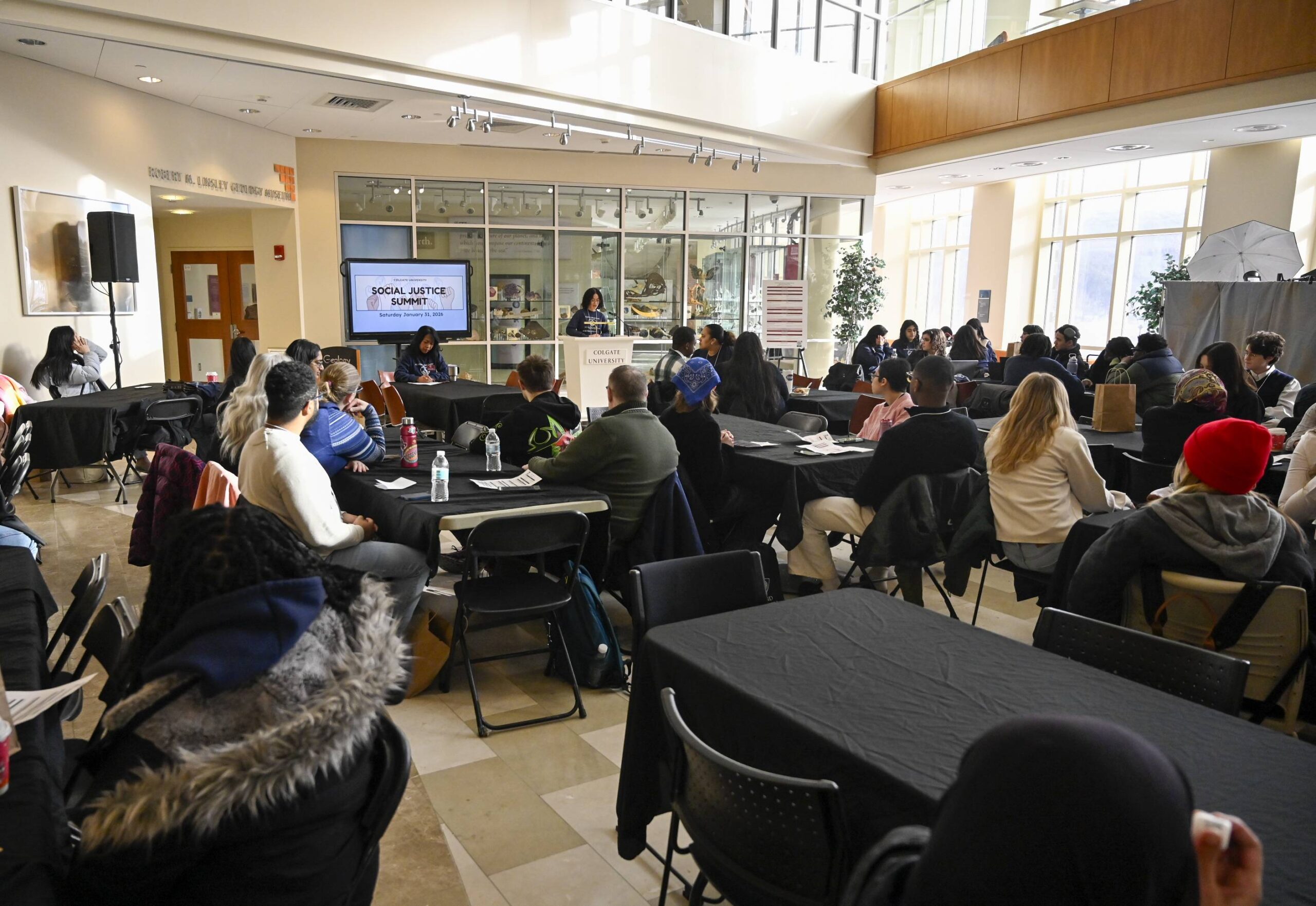
Last weekend, on Saturday, Jan. 31, the Laurentians’ Equity, Equality & Diversity club— SLU’s only multicultural club focused on helping students of color navigate networking— attended Colgate University’s Social Justice Summit. This year’s topic was “Live the Values and Lift Each Other.”
19 students attended as well as the Associate Dean for Intercultural Engagement, Inclusion, & Belonging Lynn Hampton, who was selected to attend as a chaperone. It was in collaboration with Hamilton and Hobart William Smith Colleges. There were presentations from current Colgate staff and students sharing day-to-day or worldly experiences that are typically underrepresented. Presentations range from “Privilege for Sale,” to “Exhibition by the undocumented Migration projects,” to “Everyone Has an Accent,” to “International Students and Educational Justice” and many more. Most groups were student-led, allowing students to voice their opinions and serve as a listening ear to better contribute beyond the classroom at a predominantly white institution.
Hampton is in her first year as Associate Dean for IEIB. She believes, “it’s important to recognize where we’ve been, where we are, and where were headed.”
She notes that “being a person of color at a PWI, you can often feel like you’re one of the few, and sometimes that can create feelings of isolation or alienation, or even loneliness, but you must put things into perspective. Like when you think about Jeffrey Campbell, who was the first Black male to graduate from St. Lawrence, what was it like for him? There was pretty much nobody else but him, and yet he was still very successful and thrived in many ways.” Despite being a model figure for students, she shares experiences of displacement, just as you might as a student, regardless of how you look outside.
Vinod John Mkenda, a Swahili language instructor and cultural educator, is in his second semester at SLU. “Back home, anyone can interact with you and ask you [a] question, without any worries. Here you need to ask everything, like… ‘can I talk to you?’ You need to be sensitive to everything, unlike back home.” He also said he “didn’t consider [himself] black until coming here.” He also learned about Black History Month for the first time at St. Lawrence.
Despite moving from the close-knit village of Kilimanjaro in Tanzania to the rural, small, confined space of Canton New York—where most people are similar to each other and mostly different from him—Mkenda still regards St. Lawrence as a “no pressure” place. He recalls visiting Yale and urban areas where, if he had been there, he would have been “confused,” Yet he says that “here it’s calm,” and he likes that.
There are very few professors of color on campus; still, Mkenda claims that he doesn’t see differences “in how people treat me here, I can’t notice the differences, but I can see myself, that I am different.” He doesn’t feel out of place despite needing to take the extra step to build connections with others.
Mkenda, “taught a lot of American students back home… to know where the students are coming from, the environment, what affects their learning, their experience, it pushed me to apply for the opportunity,” and he’s been here since.
Although everyday people of color should honor themselves, this month especially, you don’t just need to be physically present in a space to matter; rather, it’s about not being afraid to speak up within that space. This piece is a written voice to you from your fellow faculty and friends on campus.