


Government Shutdown Ends

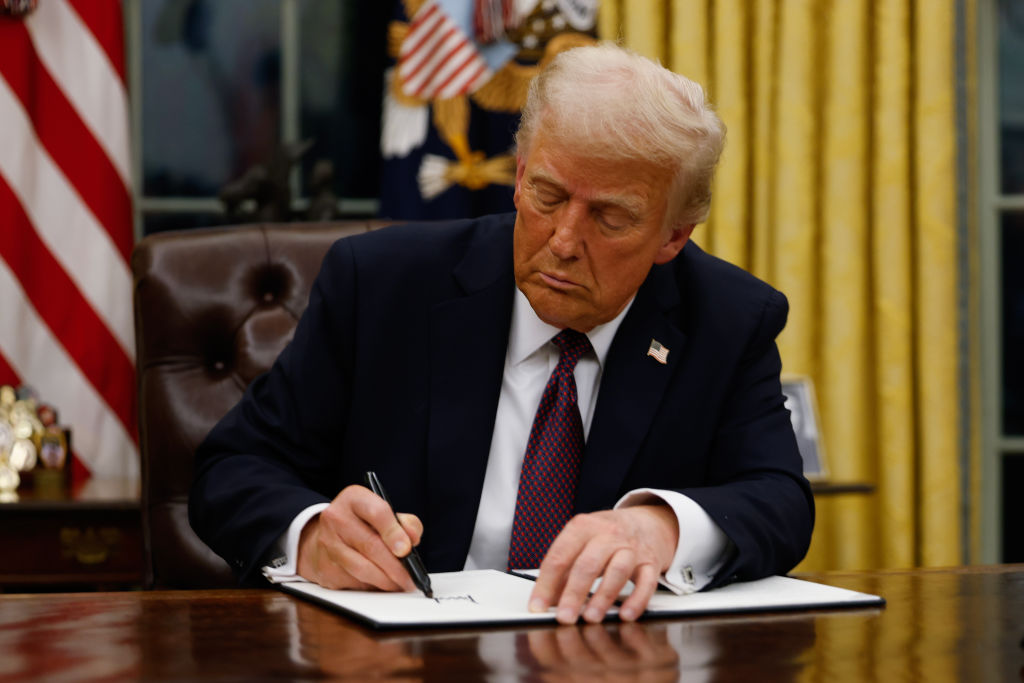
President Donald Trump signed a bill to end the longest shutdown in national history, after it passed the U.S. House of Representatives on Wednesday.
The House concluded its vote on the 43rd day of the shutdown. A narrow margin of representatives – 222 to 209 – favored the final passage of the bill. A total of eight representatives chose to vote against the inclination of their caucus, with six Democrats supporting the largely Republican-backed bill and two Republicans opposing it. This came after the bill cleared the Senate with eight Democrats voting against the majority of their caucus.
The bill will institute government spending through January 2026, while projects pertaining to the armed forces, legislative agencies and agriculture will continue to receive funding for most of next year. The bill will also rehire workers who lost their jobs during the shutdown. It will also provide financial compensation to furloughed workers, according to The New York Times.
The Times reported that Trump used the signing of the bill as a platform to call the shutdown an effort of “extortion” by the Democrats. He approves of the bill because it does not make any concessions to the Democrats’ stipulations of federal health care subsidy extensions. Trump’s obdurate stance on those extensions, in tandem with the pressure of the shutdown’s negative impacts on federal worker employment, air travel and food assistance, has resulted in the shutdown ending without Democrats gaining any traction. Many Democrats in the Senate and House were disgruntled that their peers caved to end the shutdown and did not remain unified in support of the health care extensions.
Representative Alexandria Ocasio-Cortez, a Democrat of New York, told the Times that the Trump administration needed to be held accountable not only for its lack of healthcare funding but also for attempting to defund food stamps during the shutdown. “We have federal workers across the country that have been missing paychecks,” she said. “We have SNAP recipients, millions of SNAP recipients across the country whose access to food stability was imperiled, and we have to figure out what that was for.”
If the shutdown has done anything for the Democrats, it has been to bring healthcare subsidies to the forefront of public attention. Polls indicate that most voters support the subsidy extensions. Democratic leader Representative Hakeem Jeffries of New York hopes to use a discharge petition to compel Congress to vote on a bill that would extend the subsidies for three years. It would be improbable for Republican representatives to vote for that bill. However, Jeffries thinks that as long as Republicans maintain such a strong grip on U.S. politics, Democrats will continue to pressure them to cooperate.
The one aspect of the bill that is subject to bipartisan dissent is a provision to enable lawsuits from Republican senators who had their phone records seized in the investigation following the Capitol riot on Jan. 6, 2021. Each affected senator could sue for a minimum of half a million dollars. Senate leaders were responsible for this measure, and House legislators could not have removed it from the bill without sending it back to the Senate again, extending the shutdown. The dissenting members of the House will search for a future opportunity to eliminate this provision.