


Winter Break Trips Back to SLU: Harrowing Student Returns

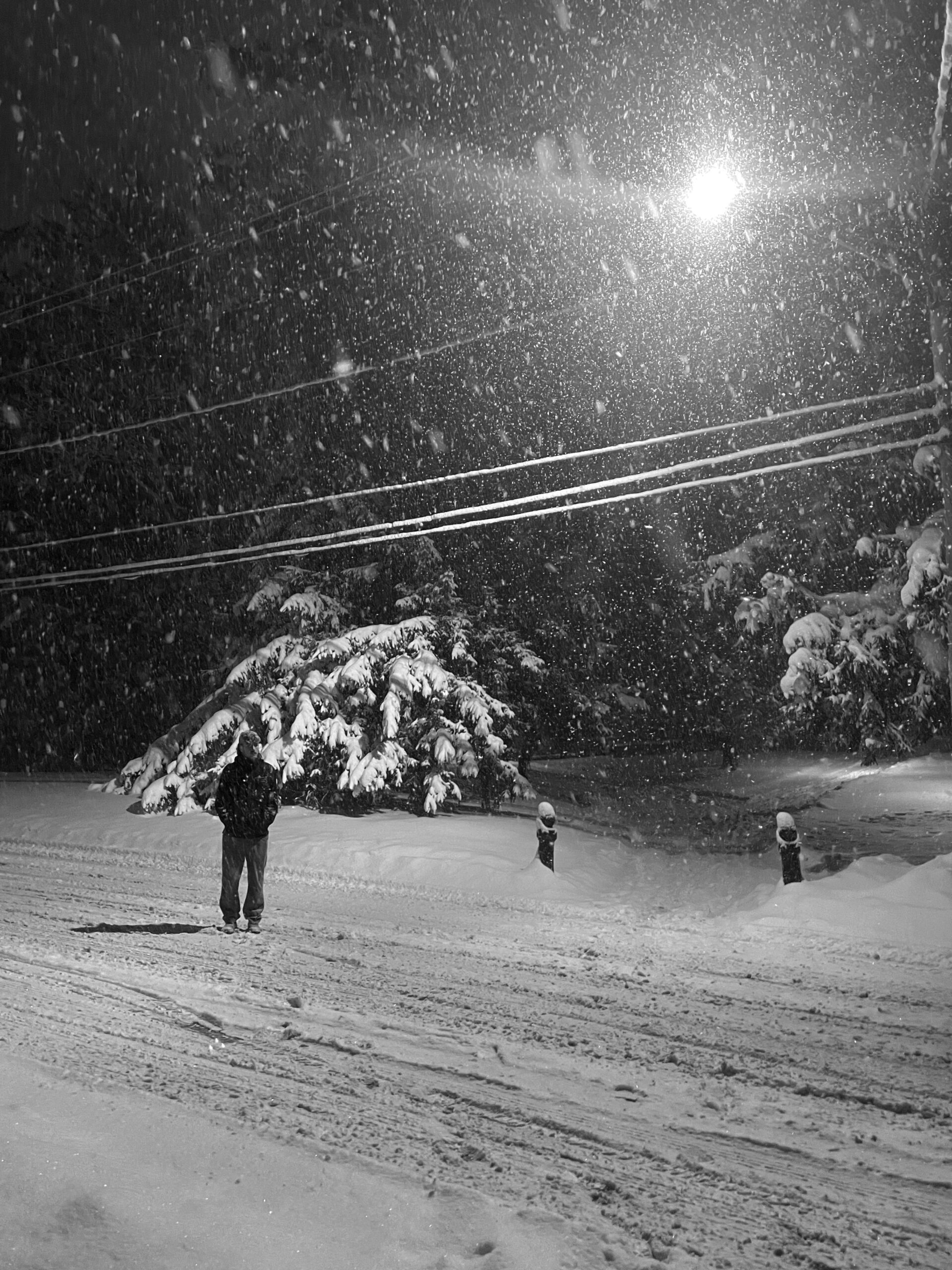
Oh winter in the North Country. It can be bitterly cold or balmy, raining or snowing, dry or damp (I’m told brick and raw are the technical New England terms), and everything in between. Many of us have been able to find beauty in the chaos throughout our years here, and that’s why we keep coming back. However, the harsh and unpredictable weather in this region can be dangerous—particularly, it seems—for St. Lawrence students traveling to and from school for breaks. Typically, summer break travel goes smoothly, but driving around Thanksgiving break, winter break and spring break can be harrowing.
Emmit Dayhoof ’26 lives in Lincolnville, Maine, a drive that typically takes him eight hours in good weather. “The easiest drive to school is always the start of the fall semester when it’s nice out, and I don’t have to worry about snow, and I can go the speed limit,” he said. Dayhoof went on to say, however, that every time he traveled for Thanksgiving or winter break during his sophomore and junior years, he got caught in a snowstorm.
“One time I was coming back I had terrible weather, so I stopped in Burlington for the night with the hopes that it would clear up the next day,” Dayhoof said. “And then it dumped like a foot and a half the following day.” It ended up taking him between 12 and 13 hours to get to school, and he said that the drive itself was scary. “I did a full 180 down this hill and went off the road a couple of times. Not bad, but just inconvenient.” Dayhoof did admit at the beginning of our interview that his car does not do very well in the snow.
Allie Gill ’26 shared that her worst drive was a couple of years ago when she was carpooling with a fellow student to SLU, and it was whiteout conditions for the majority of the drive. “I was white-knuckling the whole way. It was so brutal,” she said. However, Gill shared that it isn’t really out of the ordinary for her travels to be stressful. “I feel like I’ve had so many of those whiteout-condition drives here.”
Sometimes, the combination of bad weather and trying to get off campus on time has more sinister consequences than a stressful couple of hours. Caroline Ellis ’26 was driving down to her aunt’s house near White Plains, NY before winter break of her sophomore year when she experienced what many of us would consider to be our worst fear. “I hadn’t even hit Tupper Lake yet, and I went around this curve and hit black ice,” Ellis said. “I completely lost control of the car. One second, I was on the road, and the next second I was up on the slope of the side of the road.”
Ellis’s car then flipped over, with her still inside, into a ditch between the slope and the highway. “The ambulance came, the tow truck came, I was fine, thank goodness, but they had to double check.” She ended up getting a ride back to Canton in the tow truck. Her car, a 2003 Subaru Baja that she had only owned for a few months, was completely totaled. “It was really scary. I don’t have any family up here. I said I have my aunt, but she was five hours away. I was about to start a five-hour drive.”
Unfortunately, Ellis is only one of many St. Lawrence students who have had unavoidable near-death experiences traveling between home and school. Countless people have come across 18-wheelers stuck in the middle of the road, narrowly avoided oncoming cars that were out of control, hit black ice out of nowhere, experienced rain changing to snow in an instant, and been forced to drive in blizzards with no place to stay between school and home.
After he hit an Adirondack storm on his drive back to school from his home of Rye, NY this past break, Latham Billingsley ’28 reflected on the dangers of driving in the North Country, and what he wants SLU administrators to be aware of. “I think there’s been times where I remember a cancelling of classes to make travel easier, or have people delay a day, but I don’t think that’s consistent enough,” he said. “Oftentimes, those warnings are too late. People are on the road already or they’ve already driven through that snowstorm and made it to campus.”
He also brought up that North Country driving is hazardous even without the added factor of winter conditions. Deer spring out of the woods at random, and a five-mile-an-hour tractor or Amish buggy could be lurking around any corner. “Honestly, I think we’re just lucky as a campus that we haven’t had more issues with people going off the road and getting in serious accidents,” he said. “I think there’s a lot of times where the drive can be more taxing on people and I don’t think the school is always cognizant of that.”
Although SLU Transportation Services is no longer offering regular rides to and from nearby airports and city centers during break travel windows, many people said the department has been very responsive and helpful during travel emergencies. Students also share the sentiment that, while it would be helpful for Transportation Services to provide more ride options and the administration to instate grace periods around breaks, fixing travel safety issues will be more complicated than that. “There are so many layers to this game,” said Kaynaat Beg ’29, the Thelmo Vice President of University Relations.
In the meantime, however, Thelmo has launched a rideshare program that might be a step in the right direction. Students can request and respond to requests for rides through the Forums section of their page on SLU Central. At the very least, if you sign up to drive someone home over break, you will have an extra pair of eyes to watch the road.