


One Battle After Another: Film Review

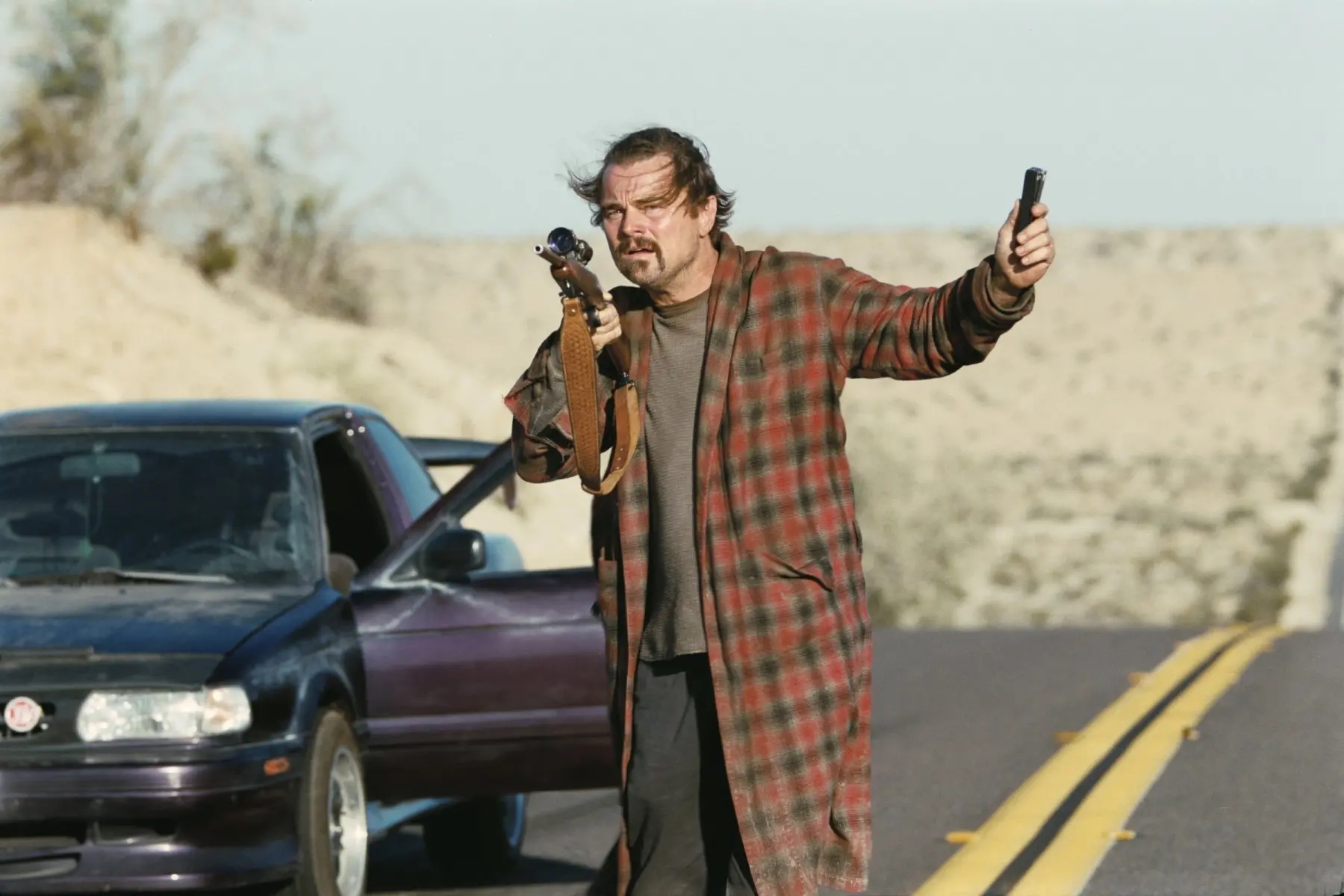
When an election cycle is said and done, when the Instagram activism dies down, when Kamala is no longer “BRAT” and our nation is politically and spiritually muddled, what or who is to guide us? In Paul Thomas Anderson’s latest film, you watch Leonardo DiCaprio have a panic attack in a Bakersfield trap house, and then you realize: this is your parents. This is everyone’s parents. This is what happened to the generation that promised to “change the world,” only to end up changing Netflix passwords and credit card companies.
“One Battle After Another”—Anderson’s adaptation of Thomas Pynchon’s “Vineland”—joins the Safdie brothers’ “Uncut Gems” and Sean Baker’s “Anora” in what’s been categorized as the prevailing “anxiety-flick.” These films supply viewers with intravenous, oftentimes unwanted, adrenaline. They don’t merely depict stress: they manufacture it within the context of the most stressful building block of all: the modern day. With “Anora,” we watched a stripper girlboss her way to the bottom. With “Uncut Gems,” glistening diamonds pierced through and killed Gen Z’s favorite comedian. Anderson’s film shows a placid, ICE-enforced America— families in turmoil, immigrants hiding in underground tunnels— yet takes no stance. It’s the modern “American Pastoral”: hyper-focused on the mountains of detritus abject liberalism leaves behind—and we’re supposed to pretend it smells like roses.
“I fried my brain,” DiCaprio’s Bob Ferguson pleads, reaching the climax of a tear-soaked confession: “I have abused drugs and alcohol for the past thirty years… I am a drug and alcohol lover.” The candor severs a multigenerational hierarchy of learned behaviors. What’s paramount isn’t the admission itself but his ability to engage with sincerity—a Sisyphean task for anyone under 25, who would rather die than admit they’ve been wrong about anything. Ever. Even once.
Teyana Taylor’s Perfidia Beverly Hills—her coy yet unbearably stark codename—is front and center, and then dead and gone within the film’s first half. She’s doing Sean Baker’s “Tangerine” revolutionary work across multicolor sets, but with Scarlett O’Hara’s emotional architecture. The unnamed postpartum hysteria is pervasive: she shoots a gun with a baby in the oven, gives birth to Charlene, played by Chase Infiniti, then immediately abandons domesticity for anarchism. Revolutionary fervor and maternal instinct, Anderson posits, are mutually exclusive. Her dynamic with Col. Steven J. Lockjaw, played by Sean Penn, is pure sadomasochistic transaction: “Beau Travail” if we saw what happened behind the scenes, with realism instead of morose male longing. These men aren’t sad and shirtless. They’re having motel-sex with the enemy in exchange for dropping bombing charges. It is wanton behavior traded for propaganda— and if that isn’t today’s “rebellion,” I don’t know what is. Instead of sneaky links and removing the enemy from your close friends story, warfare is taken into the bedroom: Penn penetrates Taylor and dusts her ass with a gun. This is what submission looks like when revolution becomes foreplay. This is what happens when ideology gets horny. Anderson presents this without judgment, because judgment requires politicism, and political positioning is what the film categorically refuses. It isn’t evasive—it’s expository.
DiCaprio’s Bob—left to revel in his battles after Taylor suffers some ambiguous offscreen death—reads like a translation from Mailer or Jones, except his eternity isn’t existential: it’s a life sentence he refuses to reckon with. He has “Lonesome Dove” frontier ethics and Reddit dad fragility. When troops raid his home during a drug binge, he escapes through a tunnel, yet tunnel vision renders him ineffable. With “Anora,” we followed a fur-coat-wearing Brighton Beach baddie chasing after her Cinderella story. In “One Battle After Another,” we run around with DiCaprio like a Grand Theft Auto character, indignant and paranoid, unable to remember a password to save his daughter’s life. DiCaprio’s Bob is David Foster Wallace’s Don Gately if Gately never got sober. In “Infinite Jest,” Gately—former narcotics addict—fights infection on his deathbed without painkillers, his own form of radicalism. Bob does the opposite: he self-medicates, turns the sanctuary city where he raises Willa into his trap house, simultaneously resident and enabler. His overprotective instincts are both sincere and ironic: interrogating her they/them friend with more tenacity than when the actual battle starts. When Deandra, played by Regina King, rescues Willa before her high school dance is raided, Bob is nowhere: he’s high, forgetting passwords and falling from rooftops.
Here is the uncomfortable truth Anderson won’t say but shows relentlessly: addiction and activism operate on identical neural pathways. While one may take the fast lane en route, both promise a slow-burning transcendence. Simultaneously, both deliver only the maintenance of dependency. Bob’s revolutionary past wasn’t enlightenment: it was only the first hit. For Bob, everything since has rendered as an attempt to chase that same high, all while the world burns around him. The scariest part? You are Bob Ferguson. I am Bob Ferguson. The finance bro in your Economics class who shows you his stocks on his Alienware laptop while salivating vape juice on your desk? He is Bob Ferguson. We are all just chasing the high of meaning while forgetting the password to our own lives; some just want back in more than others. The film suggests that 1960s radicalism didn’t fail because it was crushed by the state; it failed because it was fundamentally indistinguishable from any other form of self-annihilation masquerading as purpose.
Speaking of purposelessness, I reveled in the film’s sparse portrayal of Zoomers: they vape in bathrooms, their split-dyed Melanie Martinez hair and nonbinary energy sharply contrasting with their parents’ failed radicalism. Willa’s high school dance features Sheck Wes’ “Mo Bamba”—egregious noise to most, nostalgic cornerstone to others. These scenes aren’t condescending; they’re grocery-store mundane. I’ve noticed honest art—rare today—often includes grocery store scenes: “Ingrid Goes West,” “American Horror Story: Cult,” Ari Aster’s “Eddington.” The motif says close to nothing but reveals everything: we’re all just trying to remember what we came here to buy while the world ends in aisle seven. Like the conservative-curious, ex-NPR listener Bernie Bro on X.com, a massive high school hand-raiser, “One Battle After Another” showcases dissidence while remaining studiously apolitical. This youth isn’t radicalized—they’re surviving vape hit to bong rip to keg drip. When Willa learns about her mother’s betrayal at a revolutionary nuns’ convent, she doesn’t express ideological fury. She takes a pistol, lures a pursuer into a crash and shoots him when he doesn’t know the revolutionary countersign. She’s not joining the revolution—she’s ending it.
The film’s most audacious moment—audacious in the Sontag sense, not TikTok sense— occurs when far-right white supremacists, decked out in Patagonia and Lacoste, convene. The reveal that Lockjaw fathered a biracial daughter makes his neo-white supremacist leadership impossible, absurdist. “You should put on more makeup to make yourself look better,” Lockjaw tells Willa— forced but natural brutality. Willa retorts with Zoomer incisiveness: “Why is your shirt so tight?” Anderson shows revolutionary and reactionary spaces both replicating oppressions, neither escaping unscathed. The white supremacists and the radicals are wearing the same vests, except one is from Patagonia, and the other from Supreme.
Here’s where the film becomes genuinely radical: its apoliticism isn’t fence-sitting but forensic examination. Sixties radicalism—bombings, bank robberies, GTA-style power grid attacks resulting in the death of a HAIM sister—births only more state violence. Lockjaw becomes a colonel through vehement anti-immigrant efforts, hunting Perfidia’s comrades, shooting them on sight. Radicals in hiding don’t build a better world—they raise paranoid children in sanctuary cities, smoking weed and electing “The Battle of Algiers” as their comfort movie. The revolution will not be televised. It will be forgotten mid-sentence because someone got too high and lost the plot.
Anderson is simply observing that this is what happens. Revolutions eat their antecedents. The state consolidates power. Children watch monks self-immolate on TV and yearn for the fireworks. Everyone ends up dead, drugged, in witness protection or in therapy. The film is slapstick tragedy—physical comedy as political collapse. Anderson isn’t making statements about immigration or revolutionary violence. He’s observing that everyone involved exists in some sort of dissociation from their own actions. The “French 75” wanted to change America. Instead, they got high and forgot the password. The anxiety-flick genre doesn’t offer catharsis; it offers recognition. We’re all Bob Ferguson now: unable to remember the password, too medicated to care, convinced our paralysis is principled detachment.
“One Battle After Another” is stimulating and sedating in equal measures. Anxiety is an anesthetic; revolution is a sedative. To cope, we find ourselves taking one benzodiazepine after another, until we no longer remember what it is we were fighting for.