


“Current States of Being”: New Art Gallery Exhibit Explores AI’s Influence

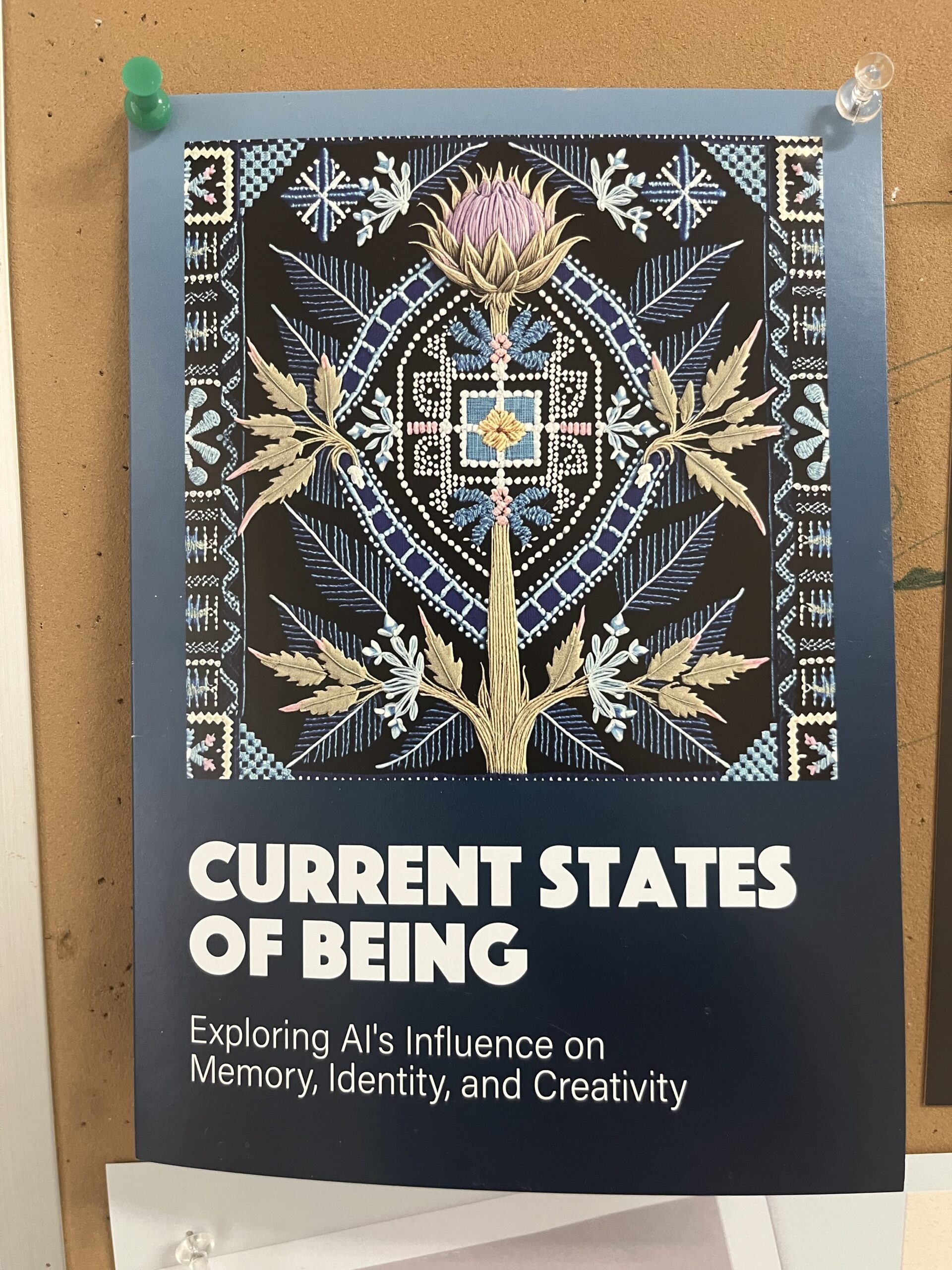
When I first entered the Richard F. Brush Gallery, I was drawn to the rhythmic repetition of the words, “Dance like you don’t have a body/ Dance like you were never born,” and its conjoining music video of a constantly morphing human figure moving through water like it was swimming. The piece itself is an act of hypocrisy: a video created by AI that attempts to depict a human swimming while urging the viewer to dance. It stems from a larger conversation about how AI, a learning engine, can speak about being human when it doesn’t have a physical body. This installment, “Dance-Like” by Eryk Salvaggio, is part of the “Current States of Being: Exploring AI’s Influence on Memory, Identity, and Creativity” exhibit.
The exhibit features three artists: Danielle Ezzo, Dr. Ameera Kawash and Eryk Salvaggio. I was lucky enough to attend the artists’ discussion wherein they each described their processes, the technology they used, and the meaning behind each piece. In Danielle Ezzo’s piece “Incantation In Twelve Prompts,” she places a poem that describes a photographer falling out of love with his craft and being transfixed by the shinier model of generative AI next to photos created with inspiration from specific prompts created by the poem. Throughout this process of using the images generated by the poem, she found that AI had more dynamic photos, which sent her spiraling into concern that the AI is more interesting. This is a feeling shared by many artists. However, eventually Ezzo realized that the struggle to make a piece – to fight to make her vision true – made her art impactful.
The second artist, Dr. Ameera Kawash, is Palestinian and uses her work to highlight the biases of the most popular AI datasets. She asks the question, “Is decolonial AI possible?” Sawt Synth explores Arab representation through a custom dataset, one built away from the popular large model sets. Another one of her pieces highlights the beneficial aspects of AI, particularly its ability to restore. “Tatreez Garden” has the viewer choose the style of Palestinian embroidery and a phrase to create their own tapestry. Kawash hopes that these pieces can be used for advocacy, serving as a tangible way to keep this Palestinian tradition alive while the people of Palestine actively fight for their ability to live.
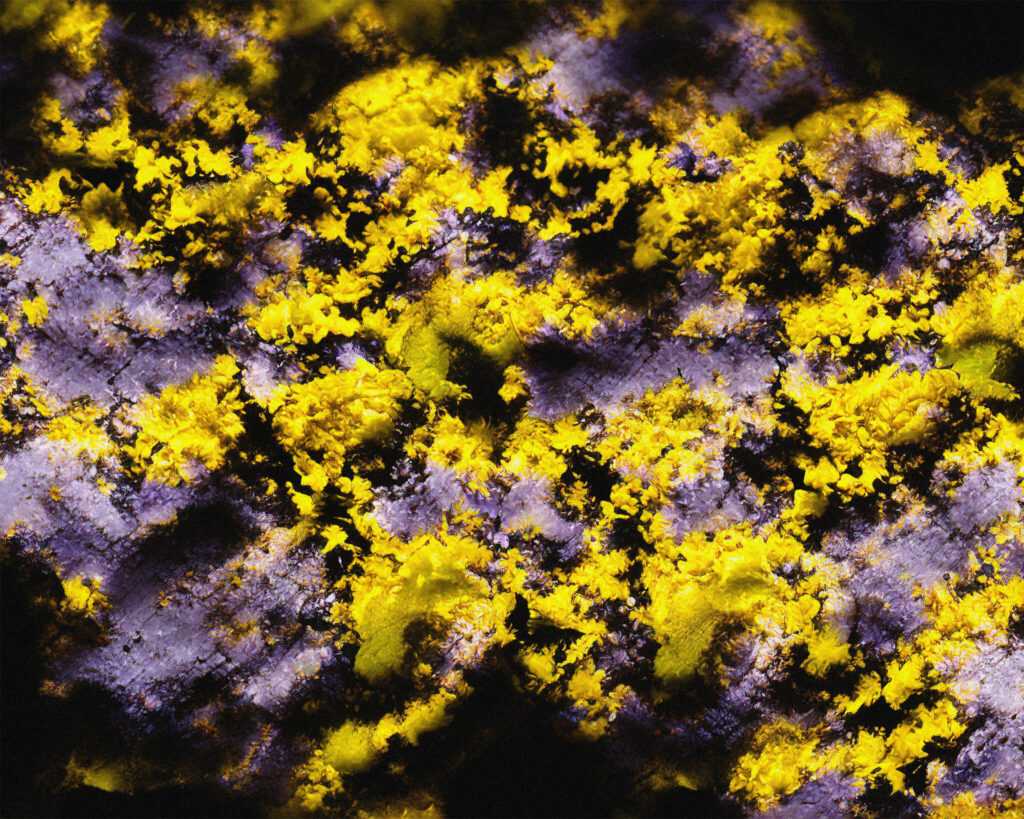
The final artist, Eryk Salvaggio, is focused on the contradictions of AI. The way AI systems are trained to generate a picture involves repeatedly creating noise on a dataset until they identify the strongest pixels, which are then categorized with the picture’s labels. Noise is essentially the absence of a category. When generating an image, a model is supposed to filter it out. So, Salvaggio asks these models to produce noise and see what it spits out.
The actual title, “Pollen Series,” is a reference to an old debate over the idea that pollen is alive because it creates movement on water. It wasn’t until another scientist burned the pollen, figuring it’d be dead, and then threw it back into the water that the pollen made the same movements. The name is also in reference to the idea that AI asks questions and appears living when it is completely devoid of life.
These art pieces don’t intend only to use AI and leave out human creativity. It asks questions about its place in our lives and what those impacts could be. I encourage people to at least enter the gallery and read one of the paragraphs about these pieces, as these are necessary conversations. Personally, I’m unsure about where I stand with AI. However, I do know that whatever comes out of AI, it will be a reflection of us, whether it’s our own curiosity or our own biases. It isn’t all that mystical once you take time to understand it.
Your blog is a guiding light that resonates with readers by offering both perspective and accessibility, making it a treasure trove of inspiration. I’m eager to see you investigate the nexus of these concepts with technological advancements, such as artificial intelligence, and how they might redefine the future of sectors. Your talent for uncovering insights and explaining complex topics is truly impressive. Thank you for consistently sharing such enlightening perspectives. I’m eager to your next post!
click: https://yarchatgpt.ru